
Blog
Tropical Fruits Coloring Pages — Mango Pineapple and More

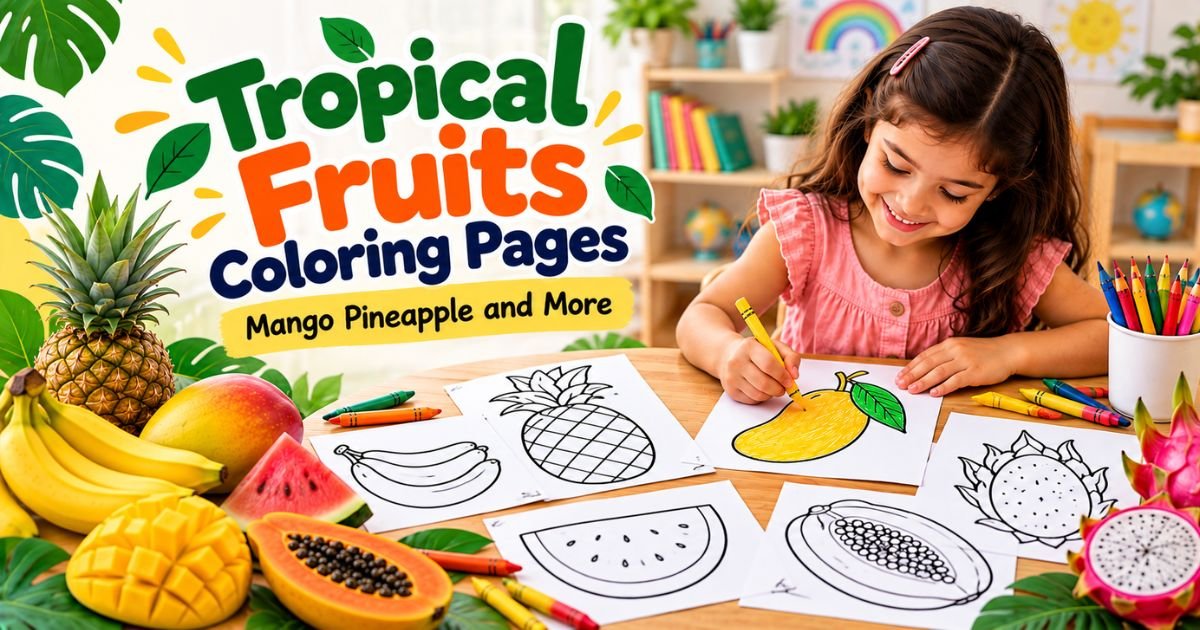
India’s summers bring an exciting variety of tropical fruits, and coloring pages featuring these colorful favourites give kids a fun way to explore and celebrate seasonal produce.
In this post, we highlight popular tropical fruit coloring pages and how to connect them to seasonal learning.
Why Tropical Fruits Make Great Coloring Subjects
Tropical fruits like mango and pineapple have bold, distinctive shapes and colors that make for visually exciting, satisfying coloring pages, while also connecting naturally to Indian seasonal culture.
💡 Tropical fruit coloring is a great opportunity to talk about seasons — many of these fruits are especially associated with the Indian summer.
Popular Tropical Fruit Coloring Pages
Mango
As India’s national fruit, mango coloring pages combine creative fun with a simple, memorable GK connection.
Pineapple
The pineapple’s distinctive textured pattern and spiky top leaves offer a fun, slightly more detailed coloring challenge.
Watermelon
Watermelon’s bright green rind and red interior make for one of the most visually striking and popular tropical fruit coloring pages.
Papaya
Papaya, with its orange interior and distinctive seeds, introduces a fun coloring detail once your child is comfortable with simpler shapes.
How to Use Tropical Fruit Coloring Pages Effectively
Step 1: Talk About the Season
Mention that mangoes and watermelons are especially popular in summer, connecting the coloring activity to a simple seasonal awareness lesson.
Step 2: Highlight India’s National Fruit
While coloring a mango, mention that it is India’s national fruit — a simple, memorable fact your child can carry into general knowledge conversations.
Step 3: Discuss Textures and Details
For fruits like pineapple, talk about their bumpy texture and spiky leaves, building descriptive vocabulary alongside the coloring.
Step 4: Pair With Fruit Tasting if Possible
If these fruits are in season, let your child taste the real fruit alongside the coloring activity for a fully sensory learning experience.
Common Mistakes Parents Make
- Introducing tropical fruits before mastering simpler fruit shapes like apples
- Not mentioning the seasonal connection these fruits have in India
- Skipping the opportunity to highlight mango as India’s national fruit
- Choosing overly detailed designs for very young children
At What Age Are Tropical Fruit Coloring Pages Suitable?
Simple tropical fruit shapes like mango and watermelon are suitable from age 4 onward, while more detailed designs like pineapple suit children aged 5 and above.
Practice Resources
Explore these free printable tropical fruit coloring pages:
- Mango Coloring Page — kidgrowth.co.in/coloring-pages/fruits/mango-coloring-page/ — India’s national fruit, great for GK connection
- Pineapple Coloring Page — kidgrowth.co.in/coloring-pages/fruits/pineapple-coloring-page/ — Fun textured design for slightly older kids
- Watermelon Coloring Page — kidgrowth.co.in/coloring-pages/fruits/watermelon-coloring-page/ — Bright, visually exciting summer fruit
FAQ
KidGrowth.co.in offers free printable tropical fruit coloring pages including mango, pineapple, and watermelon designs.
Mango is India’s national fruit, making its coloring page a fun way to combine creative activity with a simple, memorable general knowledge fact.
Simple tropical fruit shapes like mango and watermelon are suitable from age 4 onward, with more detailed designs suiting children aged 5 and above.
Mention that fruits like mango and watermelon are especially popular in the Indian summer, connecting the coloring activity to simple seasonal awareness.
Mango and watermelon are great starting points due to their simpler shapes, while pineapple’s textured pattern suits slightly older children.