Blog
How Coloring Fruits Helps Kids Learn Fruit Names and Colors

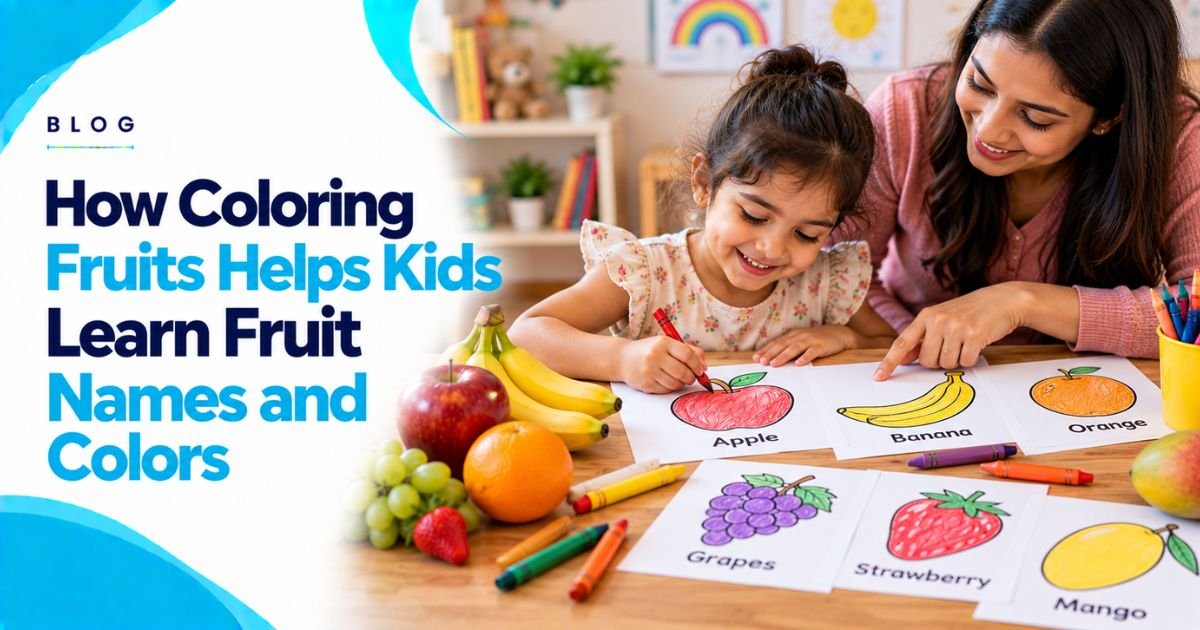
Coloring fruit pages is more than a fun pastime — it is a genuinely effective way to teach young children fruit names alongside color recognition, two foundational early learning skills.
In this post, we explain exactly how this connection works and share a simple method to make fruit coloring more educational.
Why Fruits Are Ideal for Teaching Names and Colors Together
Most fruits have a strong, well-known association with a specific color — apples are red, bananas are yellow, mangoes are orange. This makes fruit coloring a natural, built-in way to reinforce color-object connections alongside vocabulary.
💡 Unlike more abstract coloring subjects, fruits have a ‘correct’ natural color, which helps children build accurate real-world color associations.
How Coloring Builds Fruit Vocabulary and Color Recognition
Step 1: Introduce the Fruit’s Name and Color Together
Before coloring, say both together: ‘This is a banana. Bananas are yellow.’ This pairs the word and the color from the very start.
Step 2: Ask Your Child to Predict the Color
Before your child starts coloring, ask: ‘What color do you think this fruit is?’ This builds active recall rather than passive instruction.
Step 3: Reinforce During Coloring
As your child colors, repeat both the name and color naturally: ‘You’re coloring the banana yellow, great choice!’
Step 4: Connect to Real Fruits at Home
After coloring, point out the real fruit if available at home: ‘Look, this banana is yellow too, just like your coloring page!’
Step 5: Review Learned Fruits Regularly
Occasionally revisit completed pages and ask your child to name both the fruit and its color, reinforcing long-term memory.
Fun Ways to Extend Fruit and Color Learning
- Fruit and Color Matching Game — match fruit pictures to their correct color swatch
- Grocery Store Fruit Hunt — spot and name fruits and their colors during a shopping trip
- Fruit Basket Sorting — sort real or toy fruits by color
- Combine With GK Worksheets — pair coloring with fruit and vegetable identification worksheets
Common Mistakes Parents Make
- Not connecting the coloring page to the real fruit’s actual color
- Skipping the naming step, focusing only on the coloring itself
- Introducing too many new fruits at once instead of reinforcing a few well
- Not revisiting previously colored fruits to reinforce memory
At What Age Does This Approach Work Best?
This fruit name and color learning approach works especially well for children age 3 to 5, during the key period of early vocabulary and color recognition development.
Practice Resources
Support your child’s fruit and color learning with these free resources:
- Apple Coloring Page — kidgrowth.co.in/coloring-pages/fruits/apple-coloring-page/ — Simple, familiar fruit for beginners
- Mango Coloring Page — kidgrowth.co.in/coloring-pages/fruits/mango-coloring-page/ — Reinforces both vocabulary and India’s favourite fruit
- Fruits and Vegetables Worksheet — kidgrowth.co.in/worksheets/general-knowledge/fruits-and-vegetables-worksheet/ — Extra practice beyond coloring
FAQ
Saying the fruit’s name repeatedly while coloring creates a strong memory connection between the word, the shape, and the color, especially when the child repeats it back.
Yes, since most fruits have a well-known natural color, fruit coloring naturally reinforces accurate color-object associations alongside vocabulary.
Introduce the fruit’s name and color together, ask your child to predict the color before coloring, and connect it to real fruits at home afterward.
This approach works especially well for children age 3 to 5, during the key period of early vocabulary and color recognition development.
Try a fruit and color matching game, a grocery store fruit hunt, or pair coloring with a fruits and vegetables worksheet for extra reinforcement.