
Pre-Writing Tracing Worksheet for Kids (Free Printable PDF)
₹9.00
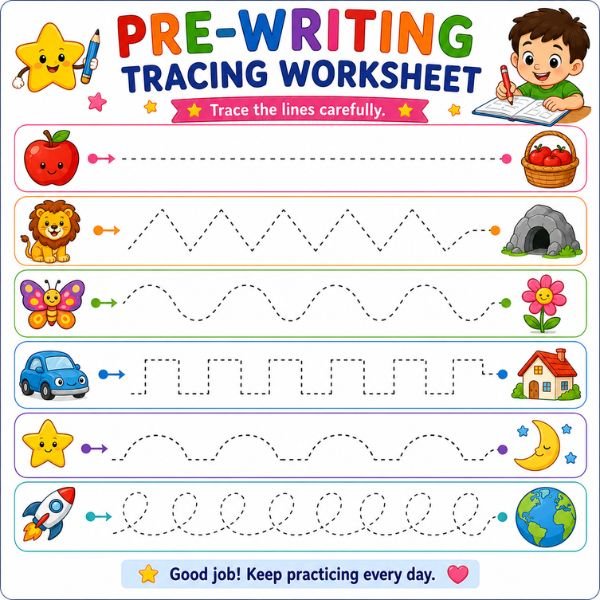
This page provides free pre-writing tracing worksheets for kids. The collection includes straight lines, curved lines, zigzag lines, spirals, dotted paths, shapes, and repeating patterns. It is perfect for children aged 2.5 to 6 years in Playgroup, Nursery, LKG, and UKG who are preparing to write letters and numbers.
Tracing these worksheets daily helps children develop fine motor skills, pencil grip and control, hand-eye coordination, spatial awareness, and writing readiness. The sheets are arranged from the simplest strokes to more complex patterns, allowing children to progress step by step at their own pace.
All pre-writing tracing worksheets are available as a free printable PDF. Parents and teachers can download and print them for daily use at home or in the classroom. The sheets can also be laminated for repeated use with a whiteboard marker.
What is a pre-writing tracing worksheet? A pre-writing tracing worksheet is a printable activity where children trace lines, curves, zigzag patterns, spirals, and shapes using a pencil or crayon. It is designed for children aged 2.5 to 6 years in Playgroup, Nursery, LKG, and UKG. These worksheets build the fine motor skills, pencil control, hand-eye coordination, and directional awareness that children need before they can write letters and numbers independently.
Pre-Writing Tracing Types — Full List
| Tracing Type | Description | Age Group | Best For |
|---|---|---|---|
| Straight Lines | Horizontal, vertical, and diagonal lines — the most basic strokes | 2.5–4 years | Playgroup / Nursery |
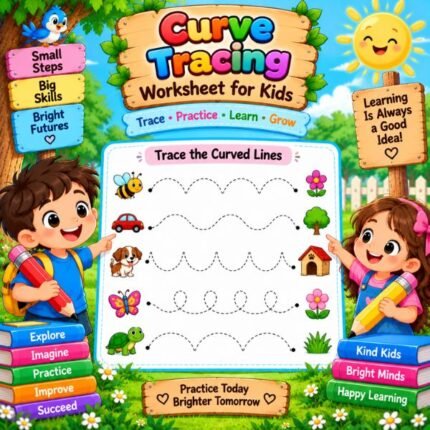
| Curved Lines | Half circles, full curves, wavy lines, and S-curves | 3–4 years | Nursery / LKG |
| Zig-Zag Lines | Sharp angled lines going left and right | 3–4 years | Nursery / LKG |
| Spiral Lines | Inward and outward spirals from large to small | 3.5–4.5 years | Nursery / LKG |
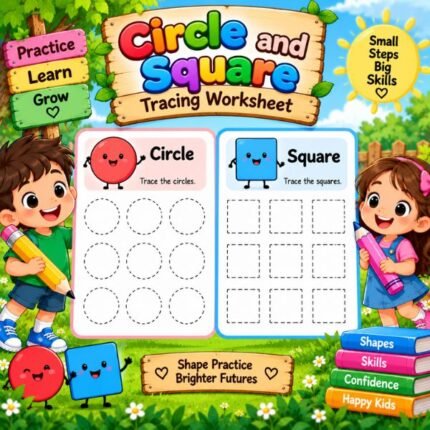
| Shapes Tracing | Circle, square, triangle, rectangle, and diamond | 4–5 years | LKG / UKG |
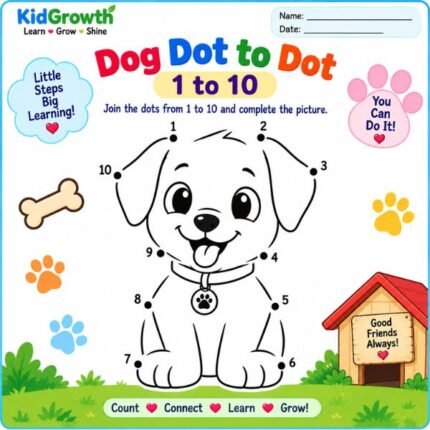
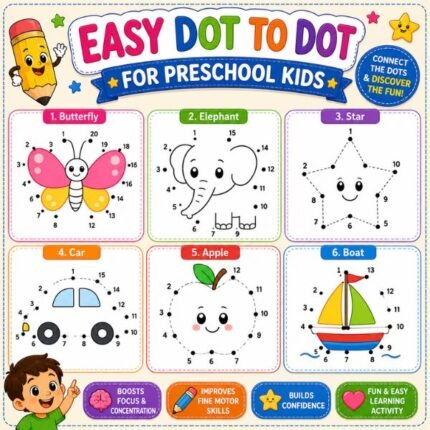
| Dotted Path Tracing | Follow a dotted path from start to finish | 3–5 years | Nursery / LKG |
| Pattern Tracing | Repeating patterns like loops, bumps, and waves | 4–5 years | LKG / UKG |
| Pre-Letter Strokes | Strokes that form the base of letters: l, c, o, v, w | 4.5–5.5 years | UKG / Class 1 |
Pre-Writing Skill Progression by Age
| Stage | Age | Activity |
|---|---|---|
| Stage 1 | 2.5–3 years | Scribbling freely on paper with crayons |
| Stage 2 | 3–3.5 years | Tracing straight lines: horizontal, vertical, diagonal |
| Stage 3 | 3.5–4 years | Tracing curved lines, wavy lines, and zigzag lines |
| Stage 4 | 4–4.5 years | Tracing spirals, dotted paths, and simple shapes |
| Stage 5 | 4.5–5 years | Tracing repeating patterns and pre-letter strokes |
| Stage 6 | 5–5.5 years | Tracing letters and numbers — alphabet and 1 to 10 |
| Stage 7 | 5.5–6 years | Writing letters and numbers independently from memory |
Skills Developed by Pre-Writing Tracing
| Skill Developed | How Pre-Writing Tracing Helps |
|---|---|
| Fine Motor Skills | Tracing lines and paths builds strength in the small muscles of the hand and fingers. |
| Pencil Grip & Control | Following a path trains children to hold and guide a pencil correctly and steadily. |
| Hand-Eye Coordination | Keeping a pencil on the tracing path requires eyes and hand to work together. |
| Pre-Writing Readiness | Tracing strokes directly prepares children for writing letters and numbers. |
| Concentration & Focus | Staying on the tracing path builds attention span and task completion ability. |
| Spatial Awareness | Tracing shapes and patterns develops understanding of direction and space. |
| Confidence | Successfully completing tracing sheets gives children confidence before formal writing. |
| Left-to-Right Directionality | Tracing left to right builds the foundational reading and writing direction habit. |
Best Tools for Pre-Writing Tracing by Age
| Tool | Best Use & Age Recommendation |
|---|---|
| Jumbo Pencil | Best for beginners aged 2.5–3.5 years. Easy to grip with small hands. |
| Thick Crayons | Good for Nursery and LKG. Soft grip and thick body help early learners. |
| Colour Pencils | Suitable for LKG and UKG. Better control than crayons for staying on lines. |
| HB Pencil | Ideal for UKG and Class 1. Standard pencil for formal tracing and writing. |
| Whiteboard Marker | Great for reusable laminated tracing sheets. Easy to wipe and redo. |
| Finger Tracing | Best starting point for very young children — trace with index finger first. |
How to Use These Tracing Worksheets (Add to Page)
- Download the free pre-writing tracing worksheet PDF from this page.
- Print on A4 white paper or laminate for repeated use with a whiteboard marker.
- Start with the easiest sheet — straight horizontal lines — and progress gradually.
- Let the child trace with their index finger first to feel the path before using a pencil.
- Show the correct pencil grip and guide the child’s hand for the first few strokes.
- Encourage the child to trace from left to right and top to bottom consistently.
- Praise effort, not perfection — staying close to the line is more important than being exact.
- Practise one tracing sheet daily for 10 to 15 minutes for best results.
Tips for Parents & Teachers (Add to Page)
- Always start with large, thick lines and progress to thinner lines as the child improves.
- Use dotted lines for beginners so they have a clear guide to follow.
- Finger tracing on a sand tray or textured surface is a great pre-pencil activity.
- For children aged 2.5 to 3 years, free drawing and scribbling should come before formal tracing.
- Never force a child to use a specific hand — allow them to naturally favour left or right.
- If a child struggles with pencil grip, consult a paediatric occupational therapist.
- Combine tracing with verbal descriptions: “We are going straight across like a road!”
FAQ Section
Q: What is a pre-writing tracing worksheet?
A: A pre-writing tracing worksheet is a printable activity where children trace lines, curves, zigzag patterns, spirals, and shapes with a pencil or crayon. It is designed for children aged 2.5 to 6 years and builds the fine motor skills and pencil control needed before writing letters and numbers.
Q: What age should children start tracing worksheets?
A: Children can begin simple tracing activities from age 2.5 to 3 years, starting with wide straight lines. By age 4, most children are ready for curved lines and shapes. Formal letter tracing typically begins around age 4.5 to 5 in LKG and UKG.
Q: What is the correct order to teach tracing to children?
A: The correct order is: straight lines first (horizontal, vertical, diagonal), then curved lines, then zigzag lines, then spirals, then dotted paths, then shapes, then repeating patterns, and finally pre-letter strokes. This sequence builds skills progressively from easiest to hardest.
Q: What skills does pre-writing tracing develop in kids?
A: Pre-writing tracing develops fine motor skills, pencil grip and control, hand-eye coordination, spatial awareness, concentration, writing readiness, left-to-right directionality, and self-confidence. These are all essential foundations for formal writing.
Q: How is pre-writing tracing different from alphabet tracing?
A: Pre-writing tracing focuses on basic strokes like lines, curves, and patterns that prepare the hand for writing. Alphabet tracing comes after pre-writing tracing and uses these same strokes to form actual letters. Pre-writing tracing is always taught first.
Q: What is the best pencil for a child to use for tracing worksheets?
A: For children aged 2.5 to 3.5 years, a jumbo pencil or thick crayon is best as it is easier to grip. For ages 4 to 5, colour pencils work well. From age 5 onwards, a standard HB pencil is appropriate for tracing and writing practice.
Q: Are these tracing worksheets suitable for CBSE Nursery and LKG students?
A: Yes. These pre-writing tracing worksheets are suitable for children in CBSE, ICSE, and all State Board Playgroup, Nursery, LKG, and UKG classes in India. They align with early childhood writing readiness goals taught in Indian preschools.
Q: Can I download the pre-writing tracing worksheet PDF for free?
A: Yes. You can download all pre-writing tracing worksheets as a free printable PDF from this page. The sheets cover straight lines, curves, zigzag, spirals, shapes, and patterns. No sign-up or payment is required.
Related Worksheets You May Also Like
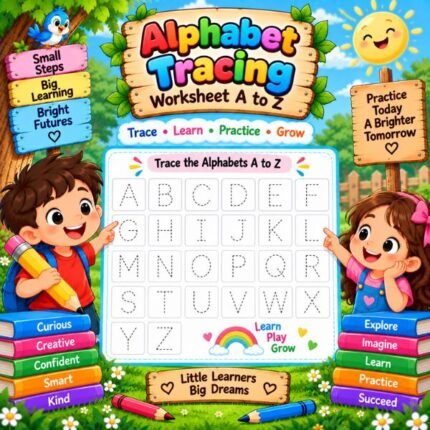
➡️Alphabet Tracing Worksheet A to Z
➡️Number Tracing 1 to 10
➡️Number Tracing 1 to 20
➡️Shape Tracing Worksheet
➡️Line Tracing for Preschool
➡️Curve Tracing Worksheet
➡️Name Tracing Worksheet
➡️Zigzag Tracing Worksheet
➡️Circle and Square Tracing
➡️Pre-Writing Tracing Worksheet


Reviews
There are no reviews yet.