
Blog
How to Improve Reading Skills in Grade 1 Kids at Home

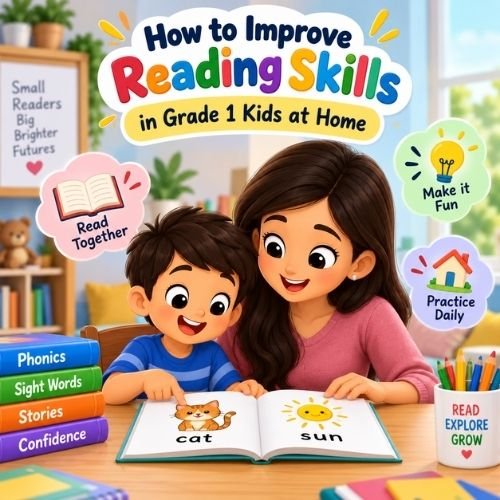
Grade 1 is a big year for reading development — children move from recognising letters to reading full sentences and simple stories. If you want to support this growth at home, small consistent habits make a bigger difference than occasional long sessions.
In this guide, we share practical, easy-to-follow tips to help your Grade 1 child become a stronger, more confident reader.
The Building Blocks of Reading in Grade 1
Reading in Grade 1 depends on several connected skills working together:
- Phonics — sounding out letters and blending them into words
- Sight words — instantly recognising common irregular words
- Fluency — reading smoothly without stopping to sound out every word
- Comprehension — understanding the meaning of what is being read
How to Improve Reading Skills — Step by Step
Step 1: Read Aloud to Your Child Daily
Even once your child can read independently, reading aloud together builds vocabulary, comprehension, and a genuine love of stories. Just 10 minutes a day makes a real difference.
Step 2: Practice Phonics and Blending Regularly
Continue reinforcing letter sounds and CVC word blending, even after basic reading has started. A shaky phonics foundation slows down all future reading progress.
Step 3: Build a Strong Sight Word Bank
Practice 3 to 5 common sight words at a time using flashcards, so your child recognises frequent words instantly instead of sounding out every single word.
Step 4: Encourage Daily Independent Reading
Let your child read simple, level-appropriate books on their own for 5 to 10 minutes daily. Choose books slightly below their current level to build confidence and fluency.
Step 5: Ask Questions About What Was Read
After reading, ask simple questions: ‘What happened in the story?’ or ‘Who was the main character?’ This builds comprehension alongside decoding skills.
Step 6: Use Rhyming and Word Family Practice
Rhyming words and word families (like -at, -an, -og) strengthen phonemic awareness, which directly supports faster, more confident reading.
Fun Ways to Build Reading Skills at Home
- Bedtime Story Time — read together every night, even briefly
- Reading Aloud Together — take turns reading sentences from a simple book
- Word Hunt Games — spot familiar sight words on signs, packets, or books
- Rhyme Time — play simple rhyming games during car rides or meals
- Story Retelling — ask your child to retell a story in their own words
Signs Your Child May Need Extra Reading Support
- Struggles to blend even simple CVC words after consistent practice
- Avoids reading time or seems frustrated during books
- Reads very slowly, word by word, without improving fluency over weeks
- Cannot answer simple questions about what was just read
These signs are common and usually improve with focused, patient practice — if concerns persist, a conversation with your child’s teacher is a reasonable next step.
Common Mistakes Parents Make
- Skipping phonics practice once basic reading begins
- Choosing books that are too difficult, causing frustration
- Focusing only on decoding, without checking comprehension
- Making reading time feel like a test rather than an enjoyable activity
What Indian Schools Expect by End of Grade 1
In most Indian school curricula (CBSE and ICSE), children are typically expected to read simple sentences and short stories independently by the end of Grade 1, around age 6 to 7, building on phonics and sight word foundations from earlier grades.
Practice Resources
Support your child’s reading practice with these free resources:
- Sight Words Grade 1 Worksheet — Common word recognition practice
- Rhyming Words Worksheet — Builds phonemic awareness for fluency
- Preschool Story Books — Simple stories for daily reading practice
FAQ
Read aloud daily, reinforce phonics and sight words, encourage independent reading of simple books, and ask questions to check comprehension.
Identify which specific skill needs support — phonics blending, sight words, or fluency — and focus daily short practice sessions on that area, staying patient and consisten
Just 10 to 15 minutes of daily reading practice, combined with being read to, makes a meaningful difference in reading development.
By year-end, Grade 1 children should read simple sentences, blend sounds, know sight words, decode new words, and understand short stories.
Yes, reading skills develop at different paces for different children. Consistent, low-pressure daily practice usually shows steady improvement over time.