
Blog
My Child Cannot Read Signs and Solutions for Parents

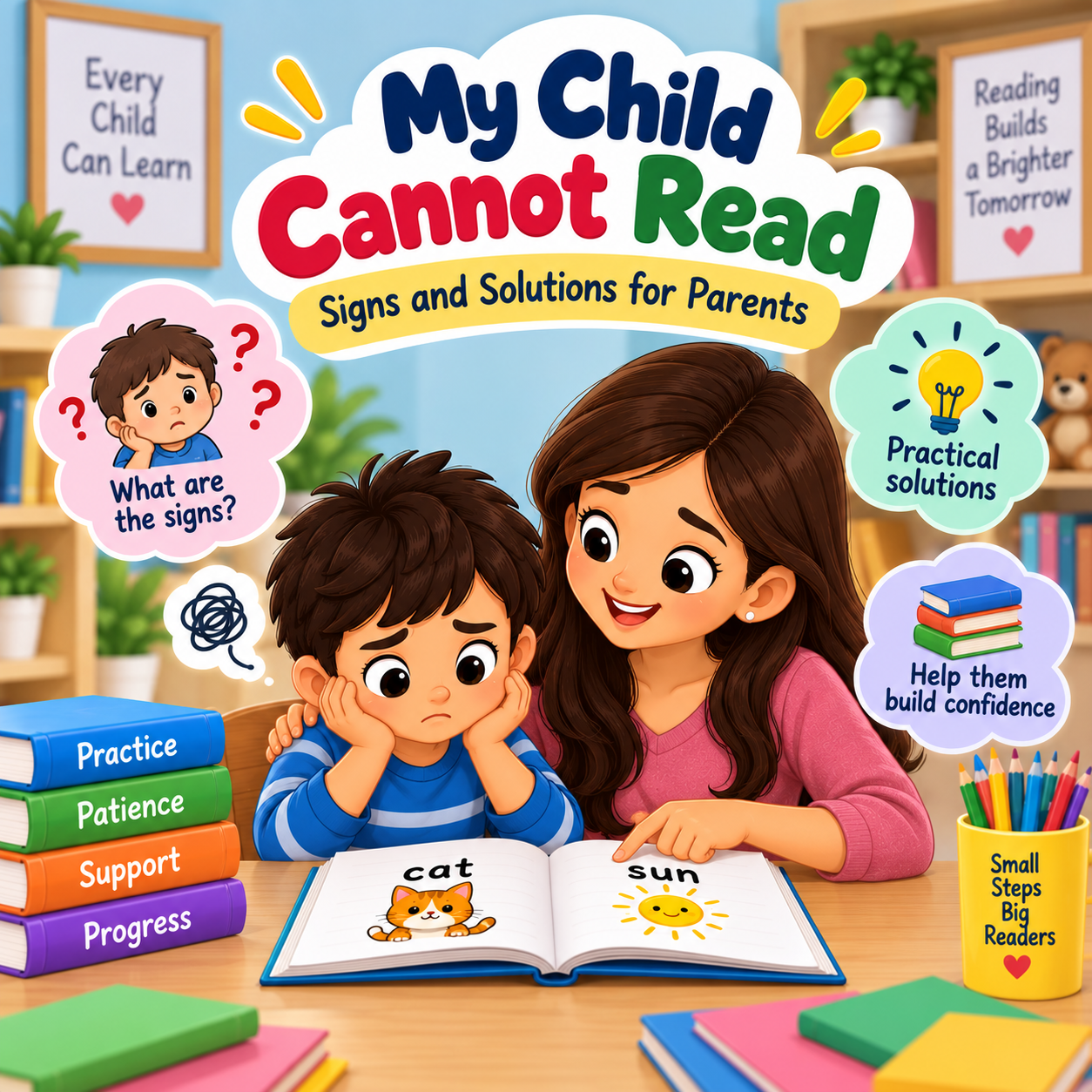
If your 6-year-old is still not reading while classmates seem ahead, it is natural to feel worried. Take a breath children develop reading skills at very different paces, and most reading delays at this age are completely manageable with the right support. If you are concerned that your child cannot read at 6 years old, remember that consistent practice and appropriate support can make a meaningful difference.
In this post, we will walk through what is considered normal, warning signs worth watching for, and practical steps you can take at home.
Is It Normal for a 6-Year-Old Not to Read Yet?
Yes, in many cases. Reading readiness varies significantly between children, and some perfectly capable readers simply take a bit longer to connect all the pieces letter sounds, blending, and word recognition. A slower start at 6 does not automatically mean there is a problem.
Common Reasons Kids Struggle With Reading
1. Weak Letter Sound Foundation
If a child does not yet know individual letter sounds confidently, blending them into words will naturally feel very difficult.
2. Not Enough Blending Practice
Some children can name letters and sounds individually but have not had enough practice blending them together into full words.
3. Limited Reading Exposure
Children who are read to less often, or have fewer books at home, may simply need more exposure and practice time to catch up.
4. Anxiety Around Reading
If reading has become associated with frustration or pressure, some children avoid it, which slows progress further — this becomes a cycle worth breaking gently.
5. An Underlying Learning Difference
In a smaller number of cases, ongoing reading difficulty despite consistent support can be a sign of a learning difference like dyslexia, which benefits from early, specialised support.
What You Can Do at Home Step by Step
Step 1: Go Back to Letter Sounds
Confirm your child knows individual letter sounds solidly before pushing further. This is the single most common gap behind reading struggles.
Step 2: Practice Blending With CVC Words
Focus daily practice on simple three-letter words, slowly blending sounds together, before moving to longer or more complex words.
Step 3: Keep Reading Time Low-Pressure
Avoid frustration or visible worry during reading practice. A relaxed, encouraging tone keeps your child engaged rather than anxious.
Step 4: Increase Daily Reading Exposure
Read aloud to your child daily, even if they cannot read independently yet. Regular exposure to books builds vocabulary and comfort with text.
Step 5: Use Multi-Sensory Practice
Flashcards, letter tracing, and hands-on games reinforce sounds and words through multiple senses, which helps many struggling readers.
Step 6: Track Progress, Not Just the End Goal
Notice small improvements — recognising more letter sounds, blending a new word — rather than measuring only against full independent reading.
When Should You Seek Extra Support?
- No progress despite several months of consistent, patient home practice
- Strong difficulty even with individual letter sounds at age 6 or beyond
- Reading difficulty combined with other language or speech delays
- Your child’s teacher raises similar concerns separately
If several of these apply, a conversation with your child’s teacher, or a learning specialist, is a reasonable and helpful next step — early support makes a real difference.
Common Mistakes Parents Make
- Comparing progress directly to siblings or classmates
- Pushing harder instead of stepping back to strengthen the foundation
- Skipping letter sounds and jumping straight to full words
- Letting frustration show, which increases reading anxiety
What is Typical for This Age Group?
In most Indian school curricula (CBSE and ICSE), children are generally expected to be reading simple sentences by the end of Grade 1, around age 6 to 7 but the path to that point varies, and steady effort matters more than a fixed timeline.
FAQ
Yes, reading readiness varies significantly between children. A slower start at 6 does not automatically indicate a problem, especially with consistent support at home.
Common reasons include a weak letter sound foundation, limited blending practice, low reading exposure, or reading-related anxiety most are manageable with focused practice.