Blog
Rhyming Words What They Are and Why Kids Should Learn Them

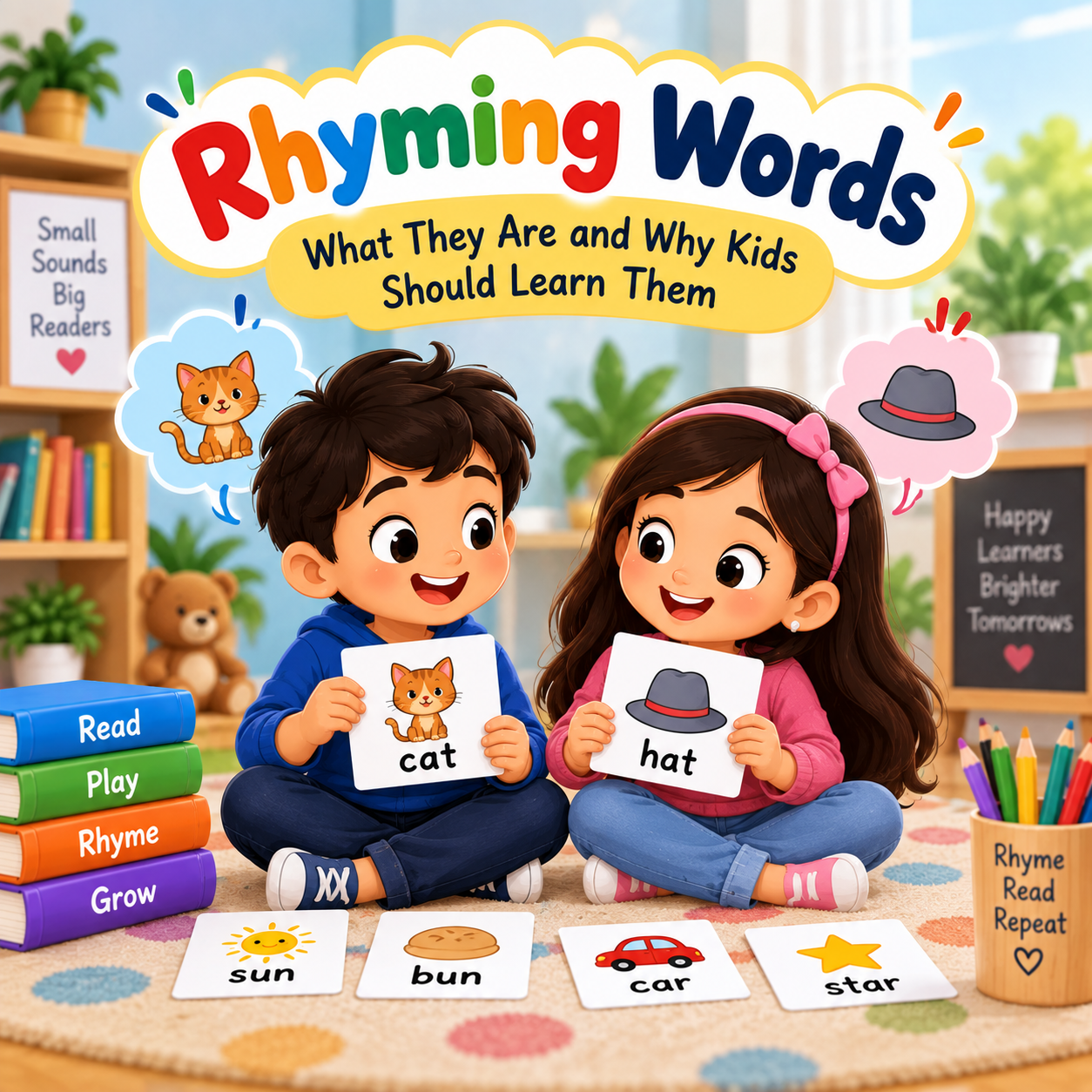
Rhyming might feel like just a fun part of nursery songs and poems, but it is actually one of the most important early reading skills a child develops. Understanding rhyming words for kids builds the foundation for phonics, spelling, and fluent reading later on.
In this post, we explain what rhyming words are, why they matter so much for early literacy, and how to teach them at home in playful ways.
What are Rhyming Words?
Rhyming words are words that end with the same or a very similar sound, even if they are spelled differently.
Examples: cat and hat, sun and fun, tree and bee, mouse and house.
Why is Rhyming Important for Reading?
Rhyming builds what is called phonemic awareness — the ability to hear and play with individual sounds in words. This skill is a strong early predictor of later reading success, since it helps children notice patterns in how words are built.
- Helps children recognise word families (like -at, -an, -og)
- Builds the sound-awareness skills phonics depends on
- Makes spelling easier by highlighting common sound patterns
- Supports memory and language development through poems and songs
How to Explain Rhyming to a Child — Step by Step
Step 1: Start With Familiar Songs and Rhymes
Nursery rhymes your child already knows are the easiest starting point. Sing them together and pause before the rhyming word, letting your child fill it in.
Step 2: Play the ‘Does It Rhyme?’ Game
Say two words and ask your child if they rhyme or not — for example, ‘cat and hat’ (yes) versus ‘cat and dog’ (no). This builds active listening for sound patterns.
Step 3: Introduce Word Families
Show your child a group of rhyming words that share the same ending, like cat, bat, hat, mat, sat. Point out how changing just the first letter creates a whole new word.
Step 4: Ask Your Child to Generate Rhymes
Say a word and ask your child to come up with a word that rhymes with it, even if it is a silly made-up word. This active generation is more powerful for learning than just listening.
Step 5: Read Rhyming Books Together
Books with rhyming text — like many classic nursery rhyme collections — naturally reinforce this skill through repeated, enjoyable exposure.
Fun Rhyming Activities to Try at Home
- Rhyme Time Songs — sing and pause before the rhyming word for your child to complete
- Rhyming Picture Match — match pictures of objects whose names rhyme
- Silly Rhyme Chains — take turns saying real or made-up words that rhyme with a starting word
- Rhyming Story Time — read simple rhyming books together at bedtime
- Rhyming Worksheets — structured practice matching and identifying rhymes
Common Mistakes Parents Make
- Focusing on spelling instead of sound when teaching rhymes
- Only listening to rhymes passively without asking the child to generate their own
- Skipping word families, which strongly reinforce rhyme patterns
- Introducing rhyming too late, after phonics has already started
When Do Kids Learn Rhyming?
In most Indian school curricula (CBSE and ICSE), rhyming is typically introduced very early, around age 3 to 4 in nursery, well before formal phonics instruction, since it builds the sound-awareness foundation phonics depends on.
Practice Resources
Support your child’s rhyming practice with these free printable worksheets:
- Rhyming Words Worksheet — Matching and identifying rhyme practice
- Word Family Worksheet — Reinforces rhyming patterns through word families
FAQ
Rhyming words are words that end with the same or similar sound, like cat and hat, even if they are spelled differently.
Use familiar nursery rhymes and songs, play simple ‘does it rhyme’ games, and encourage your child to make up their own rhyming words, even silly ones.
Rhyming builds phonemic awareness — the ability to hear sound patterns in words — which is a strong early predictor of later reading and spelling success.
Rhyming is usually introduced very early, around age 3 to 4 in nursery, well before formal phonics instruction begins.
Simple examples include cat and hat, sun and fun, tree and bee, and mouse and house — short, familiar words work best to start.