
Blog
How Coloring Animals Helps Kids Learn Animal Names

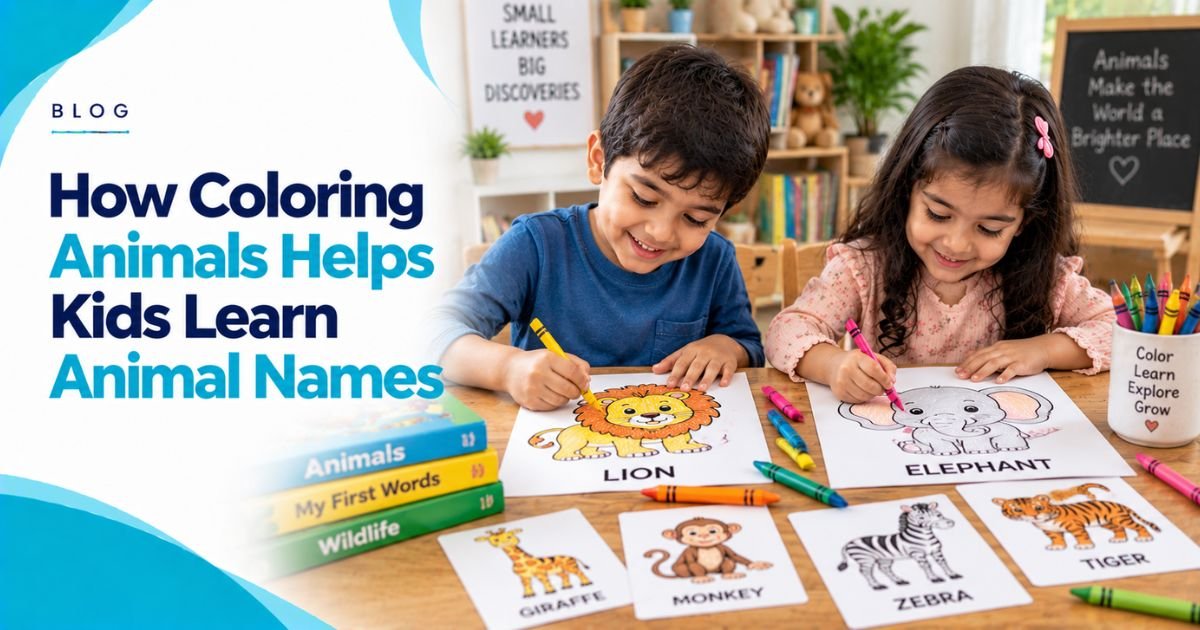
Coloring is often seen purely as a creative activity, but it can also be a powerful, natural tool for teaching young children animal names and vocabulary — without it ever feeling like a lesson.
In this post, we explain how coloring supports animal name learning, and share a simple method to make the most of this connection.
Why Coloring Helps With Animal Vocabulary
When a child colors an animal while hearing and repeating its name, multiple senses and memory pathways are engaged at once — visual (seeing the shape), motor (coloring it), and auditory (hearing the name). This multi-sensory combination strengthens memory far more than simply looking at a picture or flashcard alone.
💡 Repeating an animal’s name several times while your child colors it creates a strong, memorable link between the word and the image.
How to Teach Animal Names Through Coloring — Step by Step
Step 1: Say the Animal’s Name Before Starting
Before your child begins coloring, clearly say the animal’s name: ‘This is a dog. Let’s color the dog.’ This sets up the word-image connection from the start.
Step 2: Repeat the Name During Coloring
As your child colors different parts of the animal, repeat the name naturally: ‘You’re coloring the dog’s ear. Good job on the dog’s tail!’
Step 3: Ask Your Child to Say the Name Back
Periodically ask: ‘What animal are you coloring?’ and encourage your child to say the name themselves, reinforcing active recall rather than passive listening.
Step 4: Add One Simple Fact
Share one easy fact about the animal while coloring: ‘Dogs like to bark and play fetch.’ This builds a small piece of general knowledge alongside the vocabulary.
Step 5: Connect to the Real Animal Sound
If the animal makes a distinct sound, include it: ‘A dog says woof!’ This adds another memorable layer connecting name, image, and sound together.
Step 6: Review Previously Colored Animals
Occasionally look back at previously completed pages and ask your child to name each animal again, reinforcing long-term memory.
Fun Ways to Extend Animal Name Learning
- Animal Coloring Album — keep completed pages together and review them as a mini animal book
- Name and Sound Game — after coloring, ask your child to name the animal and its sound
- Compare Animals — color two animals and discuss simple differences, like size or habitat
- Combine With Flashcards — use flashcards alongside coloring for extra repetition
Common Mistakes Parents Make
- Coloring in silence without saying the animal’s name aloud
- Moving too quickly through many animals instead of reinforcing a few well
- Not asking the child to recall the name themselves during or after coloring
- Skipping simple facts or sounds that make the animal more memorable
At What Age Does This Work Best?
This coloring-based vocabulary approach works especially well for children age 3 to 5, during the peak period of early vocabulary development, though older children also benefit from the reinforcement.
Practice Resources
Explore these free printable animal coloring pages for vocabulary practice:
- Dog Coloring Page — kidgrowth.co.in/coloring-pages/animals/dog-coloring-page/ — Familiar animal, great starting point
- Cat Coloring Page — kidgrowth.co.in/coloring-pages/animals/cat-coloring-page/ — Another familiar, easy animal for beginners
- Farm Animals Flashcards — kidgrowth.co.in/flashcards/animals/farm-animals-flashcards/ — Extra reinforcement alongside coloring
FAQ
Coloring engages visual, motor, and auditory learning together — saying an animal’s name repeatedly while coloring it creates a strong, memorable connection.
Say the animal’s name before and during coloring, ask your child to repeat it, add a simple fact or sound, and review completed pages later.
This approach works especially well for children age 3 to 5, during peak early vocabulary development, though it benefits older children too.
Yes, coloring alone can effectively build animal vocabulary when the name is repeated aloud during the activity, though combining it with flashcards adds extra reinforcement.
Focus on a few animals at a time and reinforce them well through repetition, rather than moving quickly through many animals without review.