
Blog
Wild Animals Coloring Pages — Free Printable for Kids

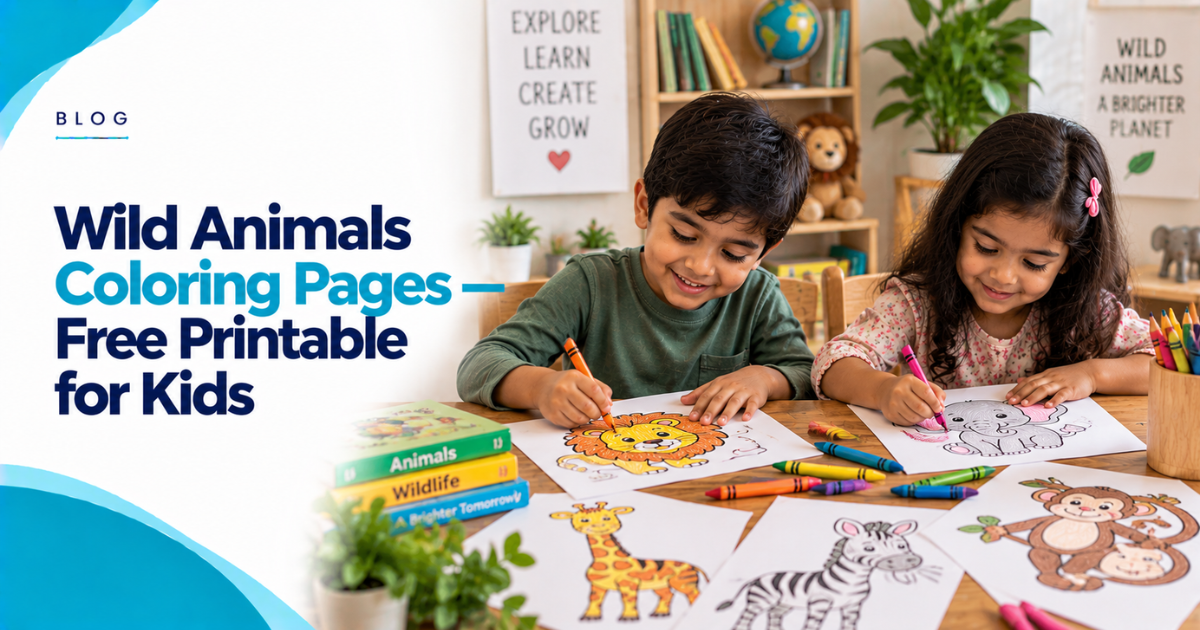
Wild animals capture children’s imagination like few other topics — the roar of a lion, the size of an elephant, the stripes of a tiger. Coloring pages featuring these majestic creatures combine creative fun with early wildlife awareness.
In this post, we round up the best wild animal coloring pages for kids, along with tips on how to make the most of this activity.
Why Wild Animal Coloring Pages Are So Popular
Wild animals are naturally fascinating to children, with their unique colors, patterns, and sizes. Coloring pages let kids engage creatively with animals they may only see in books, zoos, or documentaries.
💡 Pairing a wild animal coloring page with a simple fact about that animal turns creative time into a memorable learning moment.
Popular Wild Animal Coloring Pages
Lion
The lion’s mane offers a fun, textured area for kids to get creative with color and pattern, making it a favourite starting point for wild animal coloring.
Tiger
Tiger coloring pages let children practice coloring within the distinct stripe pattern, building focus and fine motor control in an engaging way.
Elephant
With its large, simple body shape, the elephant is one of the easiest wild animals for younger children to color confidently.
Giraffe
The giraffe’s tall neck and spotted pattern make for a fun, slightly more detailed coloring challenge for children ready to try something new.
Zebra
Zebra coloring pages are excellent for practicing straight-line coloring within the black and white stripe pattern.
How to Use Wild Animal Coloring Pages Effectively
Step 1: Introduce the Animal First
Before coloring, briefly talk about the animal — where it lives, what it eats, or an interesting fact — to build context and curiosity.
Step 2: Let Your Child Choose Colors Freely
While real-life colors can be mentioned, allow creative freedom in color choice to keep the activity fun and expressive rather than a rigid exercise.
Step 3: Talk While Coloring
Use the coloring time to ask simple questions: ‘What sound does a lion make?’ or ‘Where do tigers live?’ This builds GK alongside the art activity.
Step 4: Display or Collect Completed Pages
Create a simple ‘wild animal album’ of completed pages, building a sense of accomplishment and a fun keepsake of your child’s progress.
Common Mistakes Parents Make
- Choosing overly detailed pages that frustrate younger children
- Skipping the learning conversation that could accompany the coloring activity
- Correcting unrealistic color choices instead of encouraging creativity
- Not rotating through different wild animals, limiting vocabulary growth
At What Age Are Wild Animal Coloring Pages Suitable?
Simple wild animal coloring pages are generally suitable from age 3 to 4 onward, with more detailed designs like zebra stripes or giraffe spots better suited to children aged 5 and above with more developed fine motor control.
Practice Resources
Explore these free printable wild animal coloring pages:
- Lion Coloring Page — kidgrowth.co.in/coloring-pages/animals/lion-coloring-page/ — Fun mane detailing for creative coloring
- Tiger Coloring Page — kidgrowth.co.in/coloring-pages/animals/tiger-coloring-page/ — Great for stripe pattern practice
- Elephant Coloring Page — kidgrowth.co.in/coloring-pages/animals/elephant-coloring-page/ — Simple shape, perfect for beginners
FAQ
KidGrowth.co.in offers free printable wild animal coloring pages including lion, tiger, and elephant designs suitable for various age groups.
Simple shapes like the elephant and lion are great starting points for younger children, while more detailed designs like the zebra or giraffe suit slightly older kids.
Share a simple fact about each animal before or during coloring, and ask questions about where the animal lives or what sound it makes.
Simple wild animal coloring pages are generally suitable from age 3 to 4, with more detailed designs better suited to children aged 5 and above.
Q: Are wild animal coloring pages good for learning? Yes, they combine creative fine motor practice with natural opportunities to build animal vocabulary and general knowledge