
Blog
Benefits of Animal Coloring Pages for Kids Development

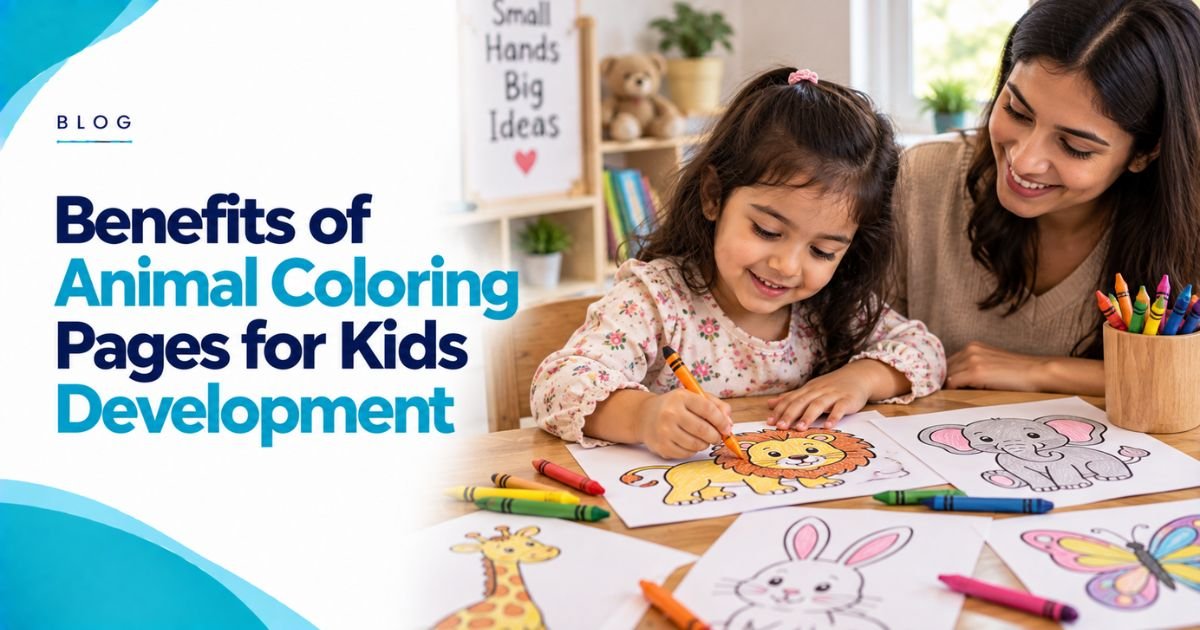
Coloring animal pages might look like simple fun, but this everyday activity supports several important areas of a young child’s development, often without them even realising they are learning.
In this post, we explore the real developmental benefits of animal coloring pages, and why they deserve a regular spot in your child’s activity routine.
1. Builds Fine Motor Skills
Holding a crayon, controlling pressure, and staying within lines all strengthen the small hand muscles children need for future handwriting and precise tasks.
💡 Coloring is one of the easiest, most enjoyable ways to build the fine motor control that later supports neat handwriting.
2. Improves Hand-Eye Coordination
Following the outline of an animal shape while coloring trains the eyes and hands to work together accurately — a skill that transfers to many other physical and academic activities.
3. Builds Animal Recognition and Vocabulary
Coloring a lion, elephant, or butterfly while naming the animal reinforces vocabulary and visual recognition, making it a natural, playful way to build general knowledge.
4. Encourages Focus and Patience
Completing a coloring page from start to finish, staying within the lines, builds sustained attention and patience — valuable skills for classroom learning as well.
5. Boosts Creativity and Color Choices
Deciding what colors to use for an animal, even if unrealistic, encourages creative thinking and self-expression in a low-pressure, enjoyable format.
6. Supports Emotional Calm and Relaxation
Many children find coloring a soothing, calming activity, making it a great option for winding down after an active day or managing restless energy.
7. Provides an Early Bridge to Writing Readiness
The same hand control developed through coloring within lines directly supports the pencil control needed later for tracing and writing letters.
How to Make the Most of Animal Coloring Time
- Name the animal and one or two simple facts about it while your child colors
- Ask your child to choose colors and explain their choices
- Display finished pages to build a sense of pride and accomplishment
- Rotate between different animal types — farm, wild, sea — to build broader knowledge
Common Mistakes Parents Make
- Correcting a child’s color choices instead of encouraging creative freedom
- Rushing the activity instead of letting it be a relaxed, unhurried experience
- Not connecting coloring to learning opportunities like animal names or facts
- Choosing pages that are too detailed or complex for a child’s current skill level
At What Age Should Kids Start Coloring Animals?
In most Indian preschool settings, children begin simple animal coloring activities around age 3 to 4, with more detailed pages introduced gradually as fine motor control improves through age 5 to 6.
Practice Resources
Explore these free printable animal coloring pages for your child:
- Lion Coloring Page — kidgrowth.co.in/coloring-pages/animals/lion-coloring-page/ — Simple wild animal outline for beginners
- Elephant Coloring Page — kidgrowth.co.in/coloring-pages/animals/elephant-coloring-page/ — Great for building fine motor control
- Butterfly Coloring Page — kidgrowth.co.in/coloring-pages/animals/butterfly-coloring-page/ — Fun, symmetrical design for creative coloring
FAQ
Yes, animal coloring pages support fine motor skills, hand-eye coordination, focus, creativity, and animal vocabulary, making them a valuable everyday activity.
Kids build hand control useful for future writing, learn animal names and recognition, and develop focus, patience, and creative expression.
Children typically begin simple animal coloring around age 3 to 4, with more detailed pages introduced gradually as fine motor skills improve.
Name the animal and share a simple fact while your child colors, turning the activity into a fun, natural learning moment alongside the art.