Blog
Fun Spelling Activities for Kids at Home 7 Proven Ideas

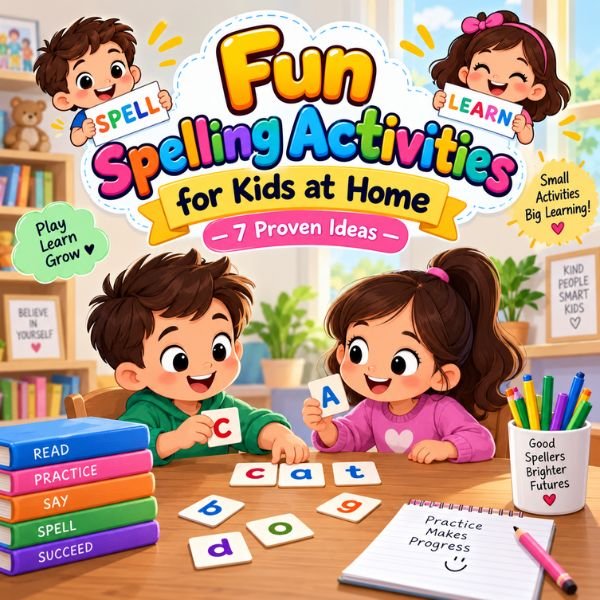
Spelling practice does not have to mean repetitive writing drills. Children learn spelling far more effectively and enjoyably through hands-on, playful activities that keep them engaged.
Here are 7 proven, fun spelling activities you can easily set up at home.
1. Magnetic Letter Building
Give your child a set of magnetic letters and a spelling word list. Ask them to build each word on the fridge or a metal tray. This hands-on approach reinforces letter order without the pressure of handwriting.
2. Sand or Rice Tray Writing
Fill a shallow tray with sand, rice, or salt. Let your child trace spelling words with a finger. The tactile sensation makes practice feel like play rather than schoolwork.
3. Word Scramble Challenge
Write spelling words with the letters jumbled up, and challenge your child to unscramble them correctly. This builds letter-order awareness in a game-like format.
4. Spelling Bingo
Create a simple bingo grid with spelling words instead of numbers. Call out a word’s definition or use it in a sentence, and let your child mark the matching word.
5. Rainbow Writing
Ask your child to write each spelling word multiple times, using a different coloured pencil or crayon each time, layering colours over the same letters. The repetition feels fun rather than tedious.
6. Mini Spelling Bee at Home
Turn weekly practice into a small family spelling bee. Call out words for your child to spell aloud, and celebrate progress with small rewards or a fun chart.
7. Word Hunt Around the House
Hide word cards around the house or write spelling words on sticky notes placed on objects. Turn practice into a treasure hunt where your child finds and reads each word.
Tips to Make Any Spelling Activity More Effective
- Keep each session short — 5 to 10 minutes is plenty for young children
- Mix activities throughout the week to keep practice fresh and engaging
- Always connect activities back to words your child is actively learning
- Celebrate effort and small progress, not just perfect results
Common Mistakes Parents Make
- Relying only on repetitive writing drills, which feel boring quickly
- Making activities too long, causing fatigue and disengagement
- Skipping the connection between fun activities and actual weekly word lists
- Turning games into high-pressure tests instead of light, enjoyable practice
When Should These Activities Be Used?
In most Indian school curricula (CBSE and ICSE), these activities work well from Grade 1 onward, around age 6, once children begin formal weekly spelling word lists at school.
Practice Resources
Support your child’s spelling practice with these free printable worksheets:
- Spelling Words Grade 1 Worksheet — Structured weekly word practice
- Jumbled Words Worksheet — Fun unscrambling activity in written form
FAQ
Use hands-on activities like magnetic letters, sand tray writing, word scrambles, and spelling bingo instead of repetitive writing drills alone.
Word scramble challenges, mini spelling bees at home, and word hunts around the house are all engaging, low-pressure spelling games.
Keep sessions short, around 5 to 10 minutes, especially for young children, to maintain focus and enjoyment.
Yes, multi-sensory and game-based spelling practice often improves retention more effectively than repetitive writing alone, since it engages multiple senses.
These activities work well from Grade 1 onward, around age 6, once children begin regular weekly spelling word lists at school.