
Blog
How to Improve Spelling for Grade 1 Kids at Home

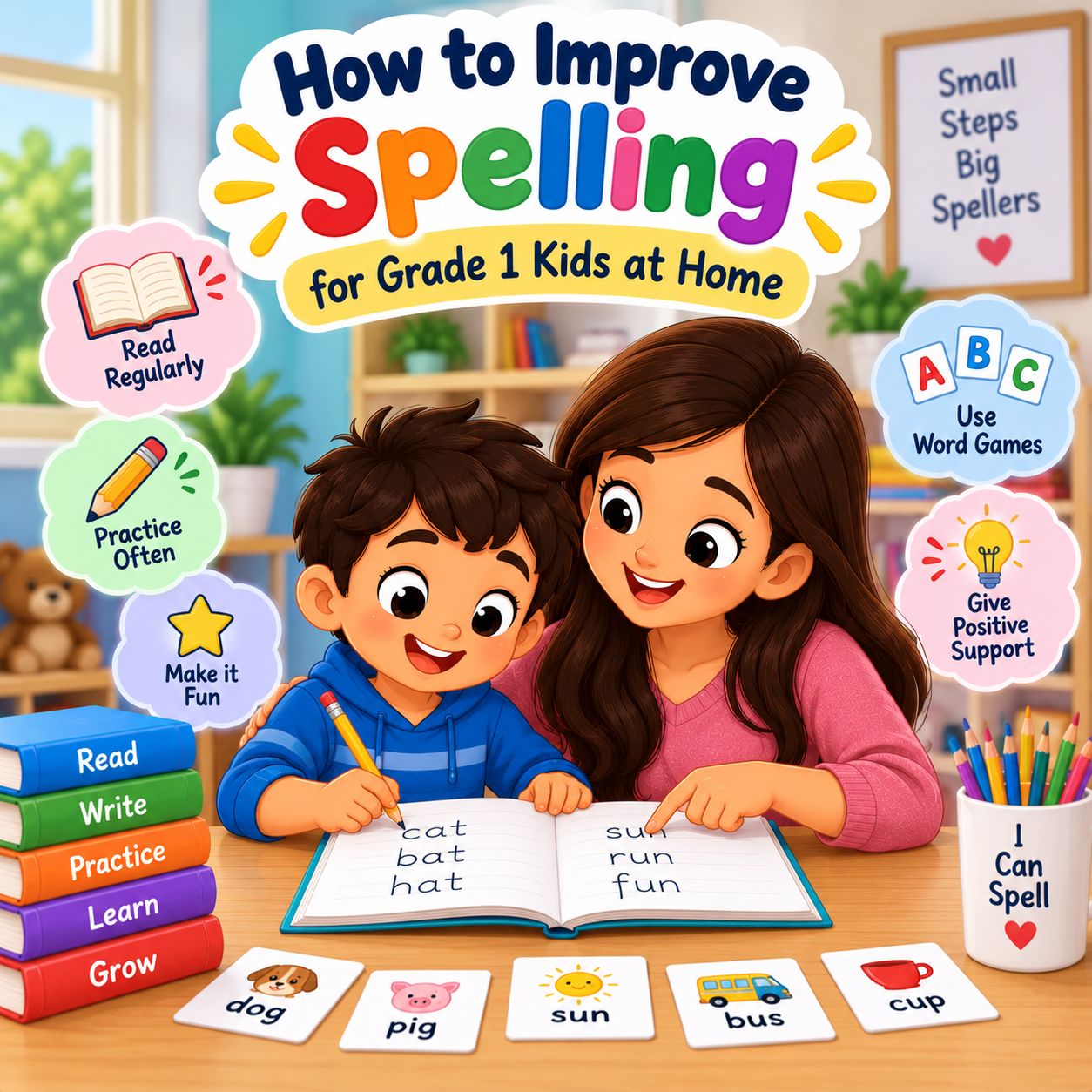
Spelling can feel like a whole new challenge after your child has learned to read. Reading and spelling use related but different skills, and many children who read well still make frequent spelling mistakes at first.
In this guide, we share simple, effective strategies to help your Grade 1 child build stronger spelling skills at home.
Why Spelling Feels Harder Than Reading
Reading only requires recognising a word, while spelling requires actively recalling and reproducing every letter in the correct order. This makes spelling a more demanding skill that naturally takes extra, focused practice.
The ‘Look, Cover, Write, Check’ Method
This is one of the most effective and widely used spelling techniques for young children:
- Look — carefully look at the word, noticing each letter
- Cover — cover the word so it cannot be seen
- Write — write the word from memory
- Check — uncover the word and check if it was spelled correctly
This simple four-step method builds active recall, which is far more effective than passive copying.
How to Improve Spelling Step by Step
Step 1: Choose a Small Weekly Word List
Pick just 5 to 8 words per week, ideally connected to what your child is already learning in phonics or reading class. Small, focused lists build confidence.
Step 2: Practice With Look, Cover, Write, Check
Use this method daily for each word on the list. Just 5 minutes a day is enough for steady progress.
Step 3: Connect Spelling to Phonics Sounds
Encourage your child to sound out each part of the word as they write it, linking spelling directly to the phonics skills they already know.
Step 4: Practice Writing Words in Sentences
Once individual words feel comfortable, ask your child to use each spelling word in a simple sentence. This builds spelling within real, meaningful context.
Step 5: Review Previous Weeks’ Words
Set aside a few minutes each week to review words from previous lists, so spelling knowledge is retained rather than forgotten after the test.
Step 6: Use a Weekly Mini Spelling Test
A short, low-pressure spelling quiz at the end of each week helps confirm which words are solid and which need a bit more practice.
Fun Ways to Practice Spelling at Home
- Spelling with Magnetic Letters — build words on the fridge or a tray
- Sand or Rice Writing — trace spelling words with a finger in a tray
- Jumbled Word Games — unscramble mixed-up letters to find the correct spelling
- Spelling Bingo — call out words and mark them on a simple bingo card
- Spelling Worksheets — structured written practice for reinforcement
Common Mistakes Parents Make
- Giving too many words at once, overwhelming weekly practice
- Only using passive copying instead of active recall methods
- Skipping the connection between phonics sounds and spelling
- Making spelling practice feel stressful instead of routine and light
When Do Kids Start Formal Spelling Practice?
In most Indian school curricula (CBSE and ICSE), formal spelling practice typically begins in Grade 1, around age 6, once basic phonics and sight word reading are established.
FAQ
Use the Look, Cover, Write, Check method with a small weekly word list, connect spelling to phonics sounds, and practice for just 5 minutes daily.
Reading only requires recognising words, while spelling requires actively recalling every letter. It is normal for spelling to develop slightly behind reading ability.
Around 5 to 8 words per week is ideal small, focused lists build confidence better than long, overwhelming lists.
The Look, Cover, Write, Check method is one of the most effective techniques, since it builds active recall rather than passive copying.
Formal spelling practice typically begins in Grade 1, around age 6, once basic phonics and sight word reading are established.